
What is the stupidest thing you’ve ever done to make a point? I once claimed, without evidence, that the idea that pepper makes you sneeze was an urban myth and proceeded to snort quite a large quantity of it. Reader, pepper makes you sneeze. Thankfully though, a group of Cheshire East councillors have me beaten. They lost local residents nearly £500,000 with a futile gesture against some new houses.
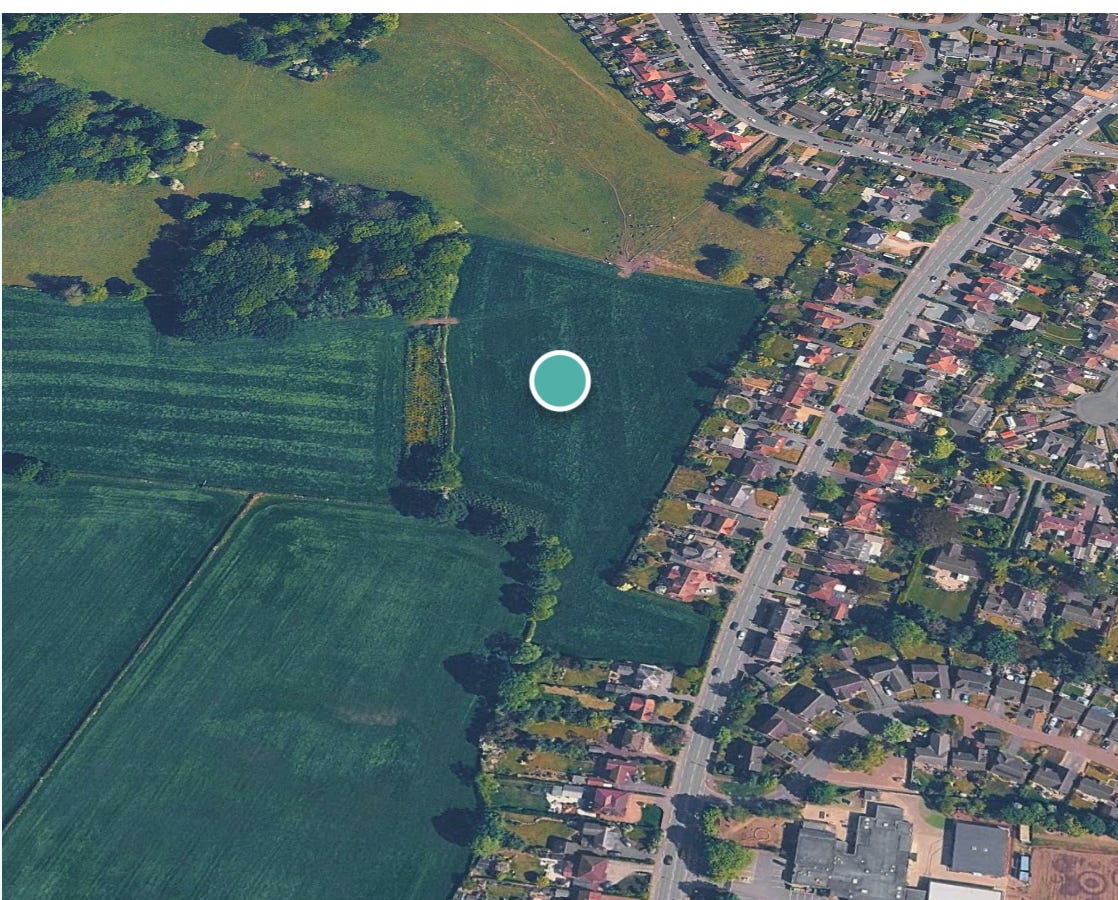
In the town of Sandbach in Cheshire, there is a planned development of 160 homes and a 70-resident care home on the edge of the town. Attempts to build on this site have been ongoing since at least 2014.

The developers are going to extraordinary lengths to deliver community benefits. Just a quarter of the 44-acre site will be housing. Contributions agreed by the developer include:
Developing a 33 acre Countryside Park on site
£242,218.50 payment for local outdoor sport
£28,598.75 for local indoor sport
£345,000 for new cycle paths and a pedestrian crossing
£144,640 for an expansion of the local primary care centre
£222,789 for local secondary schools
£425,155 for Special Education Needs provision
a new hall for the Foden’s Brass Band and other community uses
The development itself also achieved many of the council’s stated goals, with the 70-bed care home meeting a need the council themselves had identified and 30% of the housing on the development designated affordable. The site was also going to deliver a significant biodiversity net gain.
After subjecting it to the usual lengthy planning process, planning officers were supportive. The application, which was 1,917 pages long, included 348 pages of documents assessing options for achieving Biodiversity Net Gain, 247 pages of bat-related documentation, as well as a 2-page statement in favour from the local Brass Band. And this is only for ‘outline’ approval; more detail will be required at a later stage. Nevertheless, it did appear that Waint Estates had done enough to get the development to the next stage.
The Councillors Speak
However, Cheshire East Councillors had other ideas.
Councillor Gardiner, leader of the Conservative group and member for Knutsford, led the charge. He began by talking about ‘food security’ as a potential reason for rejection, despite the fact this is quite obviously a national policy matter.
Slightly more relevant were his complaints about potential highways impacts, though they were expressed in hyperbolic terms, saying that he was worried what they would say to parents of any ‘injured children’ at a nearby primary school.

However, it was quickly made clear by the Highways Officer there was no evidence at all for this assertion. The access to the site is actually 100 metres from the school and has been designed to make sure it doesn’t conflict with school traffic as much as possible.
Councillor Gardiner also complained at length about the ‘urbanisation’ that the development will create. He was particularly upset at the ‘trails for keeping people healthy’ and ‘playgrounds’ that the developers planned. We aren’t thinking of the children anymore.
Councillor Gardiner also brought up an issue around the 15-metre gap between the site and an ancient woodland not being sufficient. However, Natural England, hardly the developer’s friend, as well as the Council’s own ecology and tree officers, felt this was ample.
Councillor Gardiner conceded that while none of these reasons alone was likely to be sufficient to reject the application alone, taken together they may be sufficient.
After listening patiently to these complaints, the council’s own planning officer explained, politely and in diplomatic language, that these objections were of no merit and would be rejected when the developers appealed. The councillors were either simply wrong on questions of fact or were bringing up issues that were so small that any planning inspector would accord them either no or very little weight in the planning balance.
The planning officer went on to explain that a lot of the reason schemes like this one, which the councillors clearly dislike, are being applied for and will ultimately be approved is because the council has failed to demonstrate a five-year supply of deliverable housing sites. This is where councils set out where they think housing should be built, in line with their centrally imposed housing targets. If they fail to do this, developers have much more leeway to pick sites for themselves, and a ‘tilted balance’ in the developer’s favour applies when the planning inspector reviews appeals. The planning officer is clearly long suffering, as he was reminding councillors of how they had been in a similar situation in 2017 and had lost many appeals.
The planning officer was essentially ignored by the councillors. Attempts by council staff to give a formal costs warning, as any appeal was likely to be very expensive for council taxpayers, were also ignored. After over 2 hours of discussion, they voted to reject the proposal by 7 votes to 2.
The appeal
As the planning officer had warned, the developer appealed. Ultimately, the rejection by the councillors was so obviously wrong that Cheshire East Council decided not to contest the claim at all. However, the Planning Inspector’s enquiry went ahead anyway. Inevitably, and for almost exactly the same reasons the planning officer had stated at the council meeting, the Planning Inspector concluded that the appeal was upheld and the developer could proceed. This was all very expensive.
For the national taxpayer, this meant paying for the planning inspector to visit the site, read thousands of pages of documents, conduct the hearing and write his report. It will have cost thousands of pounds in his time and expenses.
For the developer, and ultimately the homebuyer, there were high costs too, as they had an expensive barrister who called six different experts to give testimony.
However, it is the Cheshire East residents, especially in Sandbach, who paid the highest costs. Firstly, the council had its own expensive barrister and two of its council officers attended the hearing, as well as sending in lots of documentation for the hearing. This likely cost thousands of pounds in council tax payer money.
More substantially, though, the inspector also found that some of the payments Wain Estates had agreed to were not in fact supportable under planning law. The inspector therefore cancelled the requirement for the developer to contribute £345,000 to local cycling and pedestrian infrastructure and £144,640 to a nearby primary health care centre were not justified. The council therefore appears to have given up nearly half a million pounds’ worth of local benefits from the scheme on a completely groundless rejection that they ultimately concluded it was not worth trying to defend.
This is the system working
Relative to many other attempts to build the housing Britain needs, this is a ‘success’ for the current planning system. The homes will get built eventually. But thanks to Cheshire East’s performative refusal, we will get them later, more expensively, and with fewer improvements for local people. A system that encourages grandstanding, punishes housebuilding and leaves residents to pick up the bill is not one that works.

There's been a big increase in refusals which are then not defended at appeal by councils recently. Sometimes a rule 6 party is there to pick up the fight. The Planning Inspectorate still holds a full appeal with residents making their last speeches and various experts summoned before the inevitable result is reached. But councillors have done their job of delaying the permission as much as they can, with the costs pushed onto everyone else and no need to answer tricky questions from barristers. Hard not to feel that they have worked out this is the most politically safe position.
Inspectors have discretion over rule 6 status and if they are granting it to residents groups because the council is not defending the appeal, that is only wasting more time and money.
Genius! I guess the interesting question is whether the residents favour that outcome and are happy to pay for it within their local taxes or whether they will vote out the councillors concerned.