
For the second time since coming to power, Labour have rewritten the National Planning Policy Framework. At the heart of their re-write of the single most important document in England’s planning system is Labour’s new policy of a ‘default yes’ for new homes near train stations.
There is an extremely strong case for building more homes near train stations. It is not just the green option, because it takes cars off the road, cutting air pollution and carbon emissions as a result. It is also the option that boosts economic activity, allowing more people to access the job markets that have the best opportunities for them.
The new NPPF sets minimum densities of between 35 and 45 dwellings per hectare within walking distance of well-connected train stations, roughly the density of semi-detached housing at the lower end and terraced housing at the upper end. Crucially, this applies outside existing settlements, and provided certain criteria are met (more on that later), on land with Green Belt protection.
In theory, if you were to build out all of the sites that this policy applied to, we could see half a million, if not far more, homes built.
The big question with the NPPF is how much will it actually move the dial on building homes near stations? What we have is a ‘default yes.’ This means that when you put in a planning application, you are more likely to be successful than in the past. However, it’s still not certain, and councils can use other means to prevent housing from being built. Often, planning committees attempt to block developments that national planning policy tells them to approve. The homes only get built when the developer gets the lawyers involved and mounts an appeal. It is likely to take a while before these policies really lead to change on the ground.
Is the ‘Train Belt’ viable
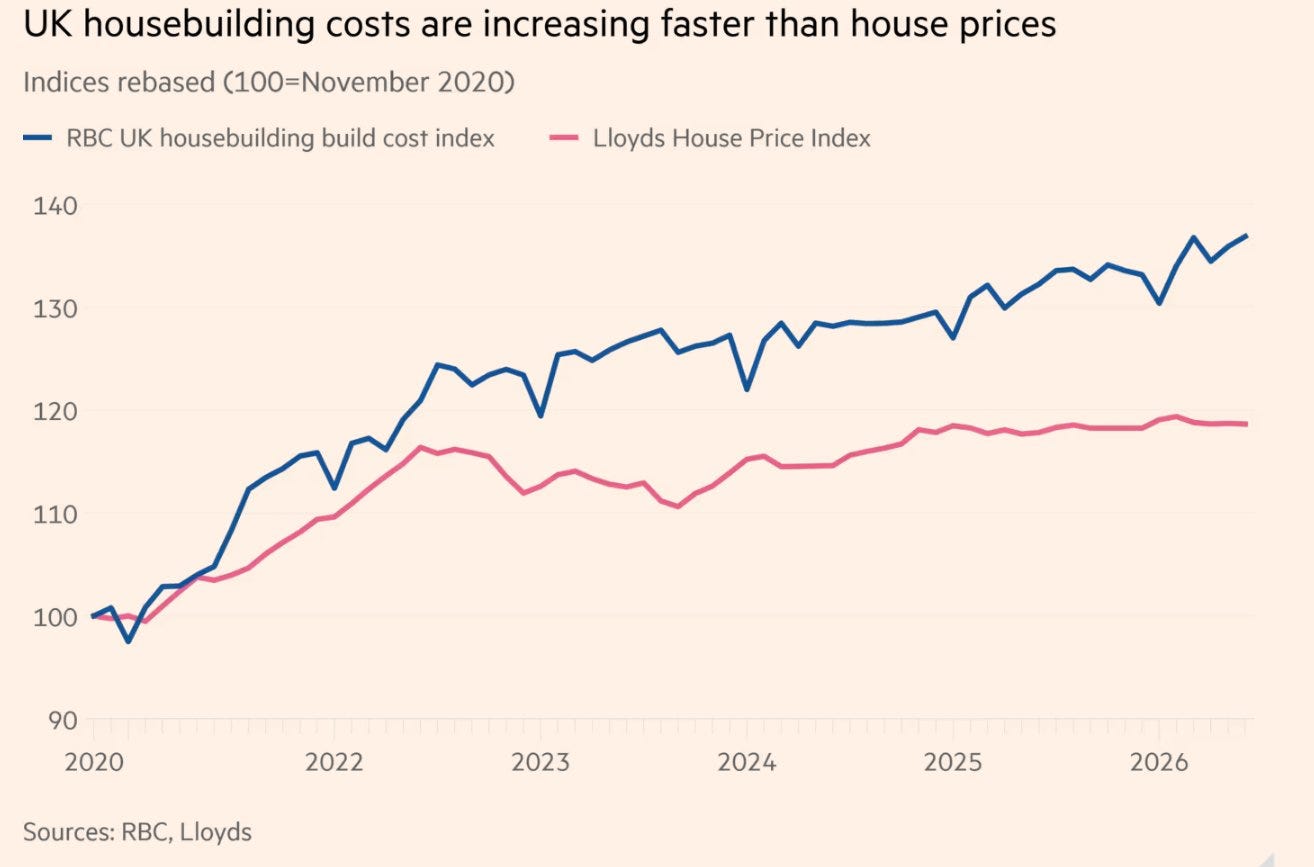
Sometimes councils don’t intend to block housing, but end up making it unviable by making strong demands on developers to provide things like infrastructure and affordable housing. As a result, projects that would otherwise go ahead become loss-making. This is a big problem nationwide. Construction costs have risen at a time when house prices are either flat or falling. This means many projects that may have been viable five years ago are now unviable.
One of the most radical pro-viability measures within the Government’s draft NPPF would have allowed smaller developers (building sites with fewer than 50 homes) to pay cash in lieu of providing affordable housing. Unfortunately, this was scrapped after intense lobbying from the social housing sector.
High affordable housing requirements within the Government’s ‘Golden Rules’ are likely to dash any hopes of a ‘Train Belt’ building boom. Major developments on the Green Belt remain subject to ‘Golden Rules’, which require developers to provide an extremely high share of new homes at below-market prices. In most cases, this will be a 15 percentage point higher affordable share (subject to a 50% cap) than what would typically be required locally. A 300-home development will typically be forced to provide between 110 and 150 homes at a discount.
In general, the Golden Rules may not be a large blocker given Green Belt land values are typically far lower. However, for station developments in particular it could push many into unviability. If a major development near a station risks overwhelming local infrastructure, councils might quite reasonably insist developers fund capacity-enhancing station upgrades such as longer platforms or wider pedestrian bridges. Each demand in isolation might be achievable, but combined could wipe out any potential developer profit. And without the prospect of profit, developers don’t build.
Automatic or default?
The ‘default yes’ for sustainable development within settlements (i.e. towns/cities) and for homes near well-connected stations outside settlements will get more homes built, but there’s substantial uncertainty as to how many. Part of the issue is the lack of certainty. Our planning system is discretionary. Ultimately, each decision will involve planners weighing the benefits of development against a range of harms from conservation to traffic impact. The new NPPF tells planners to give greater weight to those benefits, but it is still far from guaranteed that a new development will get the green light.
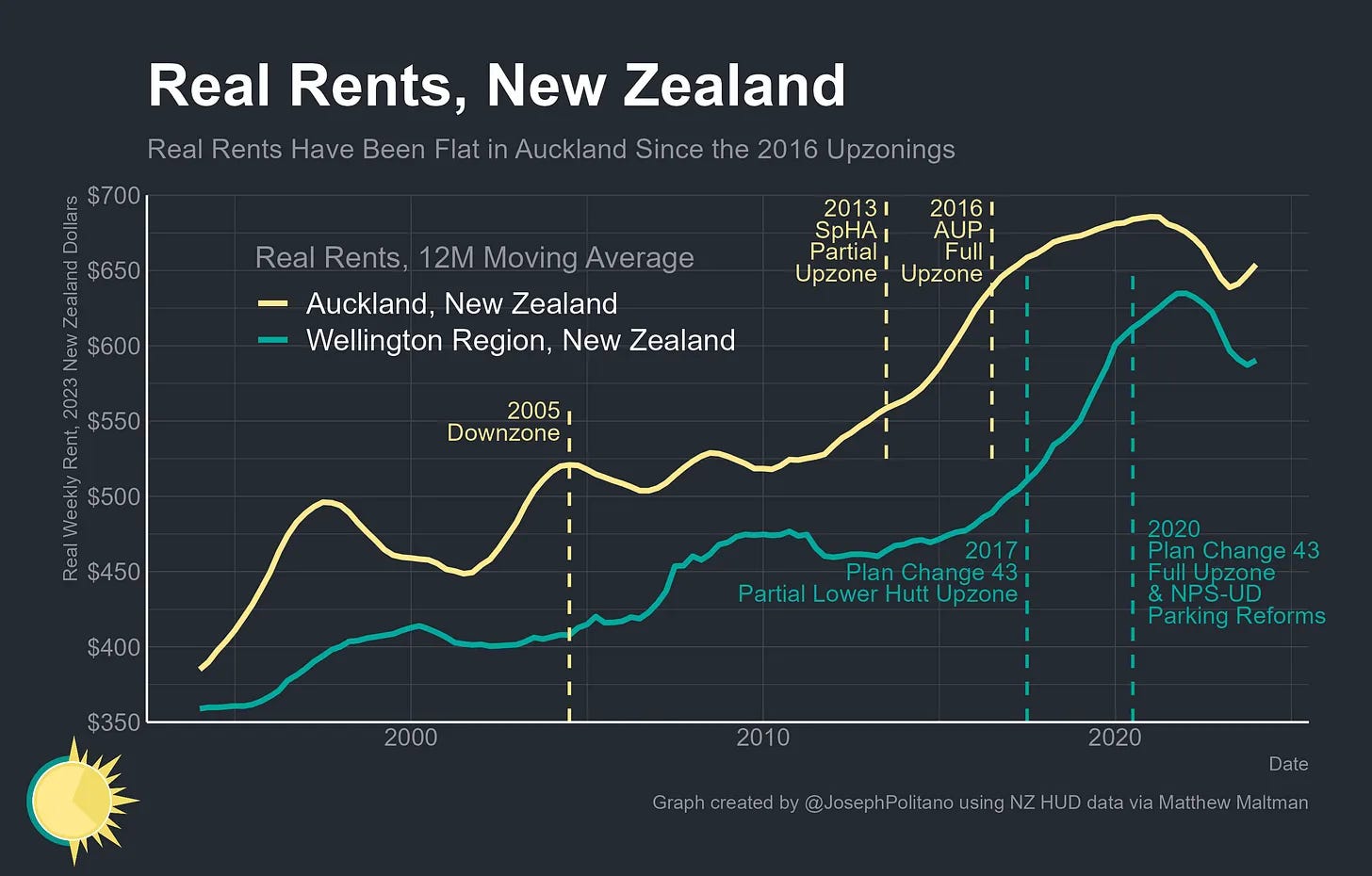
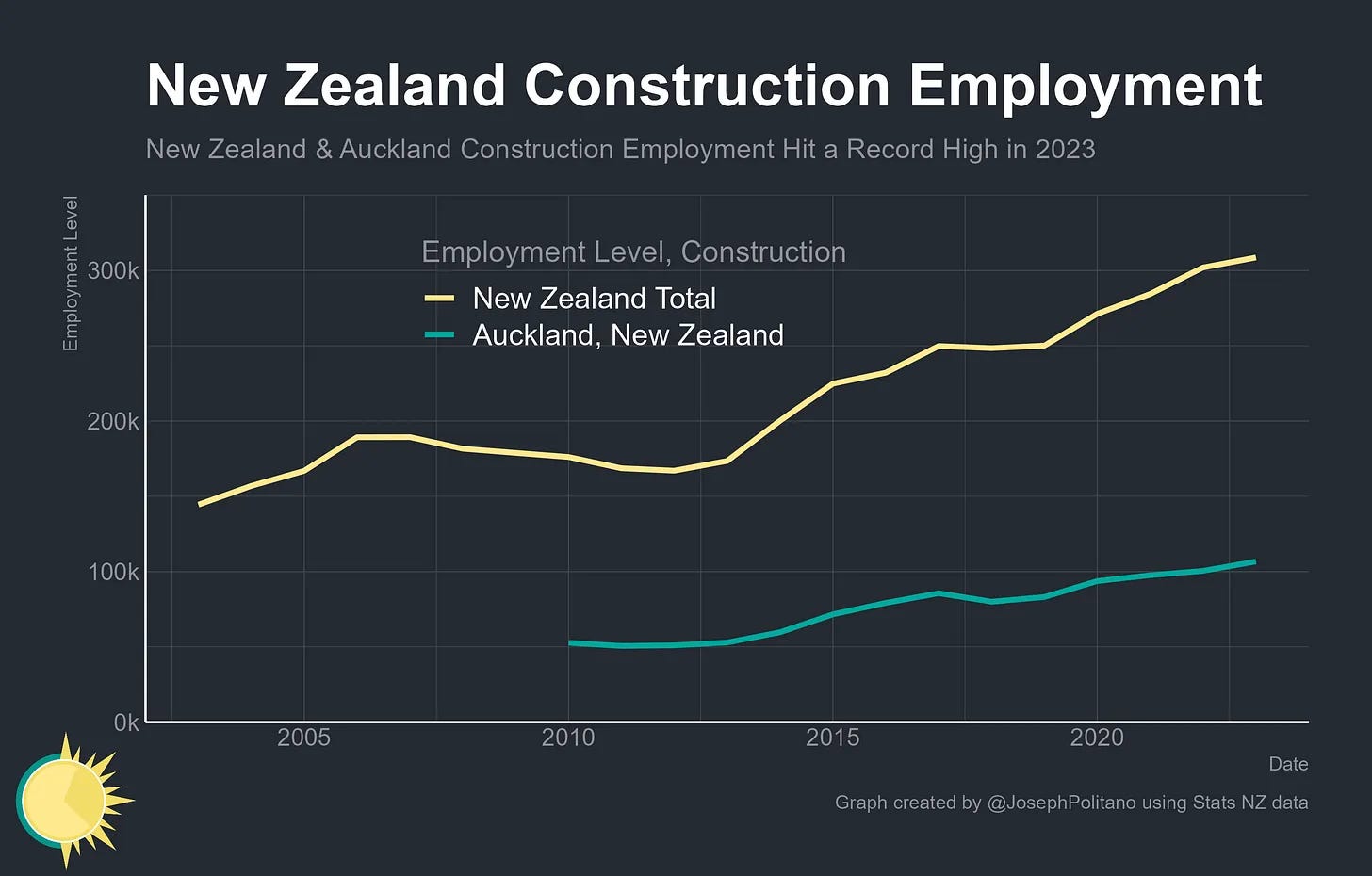
International experience suggests pro-development reforms have bigger effects in systems that are more rules-based and place less weight on the judgment of any individual planner. In New Zealand, Labour under Jacinda Ardern put in place really strong rules that effectively meant medium-density housing (4-6 storeys) near a busy transport link got an automatic (not default) yes. That cuts through a lot of the bureaucracy. At the moment, it is not unusual to see planning applications for relatively modest developments, say a block of 10 to 12 flats, that stretch longer than Tolstoy’s War and Peace. New Zealand’s policy led to a large building boom. Construction employment surged, house building surged, and rents fell. One study estimates that rents in the cities where the policy applied were 30% lower than they otherwise would have been.
The really radical reform
There is more to the new National Planning Policy Framework than the ‘Train Belt’ policy.
One of the most surprising and radical moves in the draft NPPF was the idea of making it much easier for people to get planning permission to build in their back gardens and in the space above their buildings.
The policy explicitly supports converting space above shops, building on or above redundant service yards and car parks, adding mansard roofs, filling gaps in rooflines, putting taller buildings on corner plots, building upwards on existing homes and commercial buildings, and creating entirely new homes within existing residential plots and gardens.
This policy on using land better could be transformative. In California, they passed a law allowing people to build small homes (known as accessory dwelling units, or ADUs) in their backyards. In just five years, more than 100,000 ADUs were built as a result of this measure. In LA, one third of all new homes built are now ADUs.
In Ireland, a similar reform creating what they call Seomraí has recently been approved. The think tank Progress Ireland estimate their reform could create 350,000 homes.
It is unclear whether Britain (where gardens are typically smaller) will be able to boost housing by as much as California (or Ireland hopes) but a policy supporting granny flats could be very big indeed.
More likely to move the dial on supply is the support for upward extensions. Create Streets estimate that if just 10% of the 4.7 million pre-1919 homes in England added mansard floors, it would create close to a million new bedrooms. Create Streets also found that a pro-mansard policy in one East London neighbourhood led to 300 additional bedrooms. A policy permitting considerate upward extensions, in some cases allowing homes to double in height, to address overcrowding among Haredi Jewish families in South Tottenham, saw extremely high levels of take-up (roughly 60% of all homes that could be extended were).
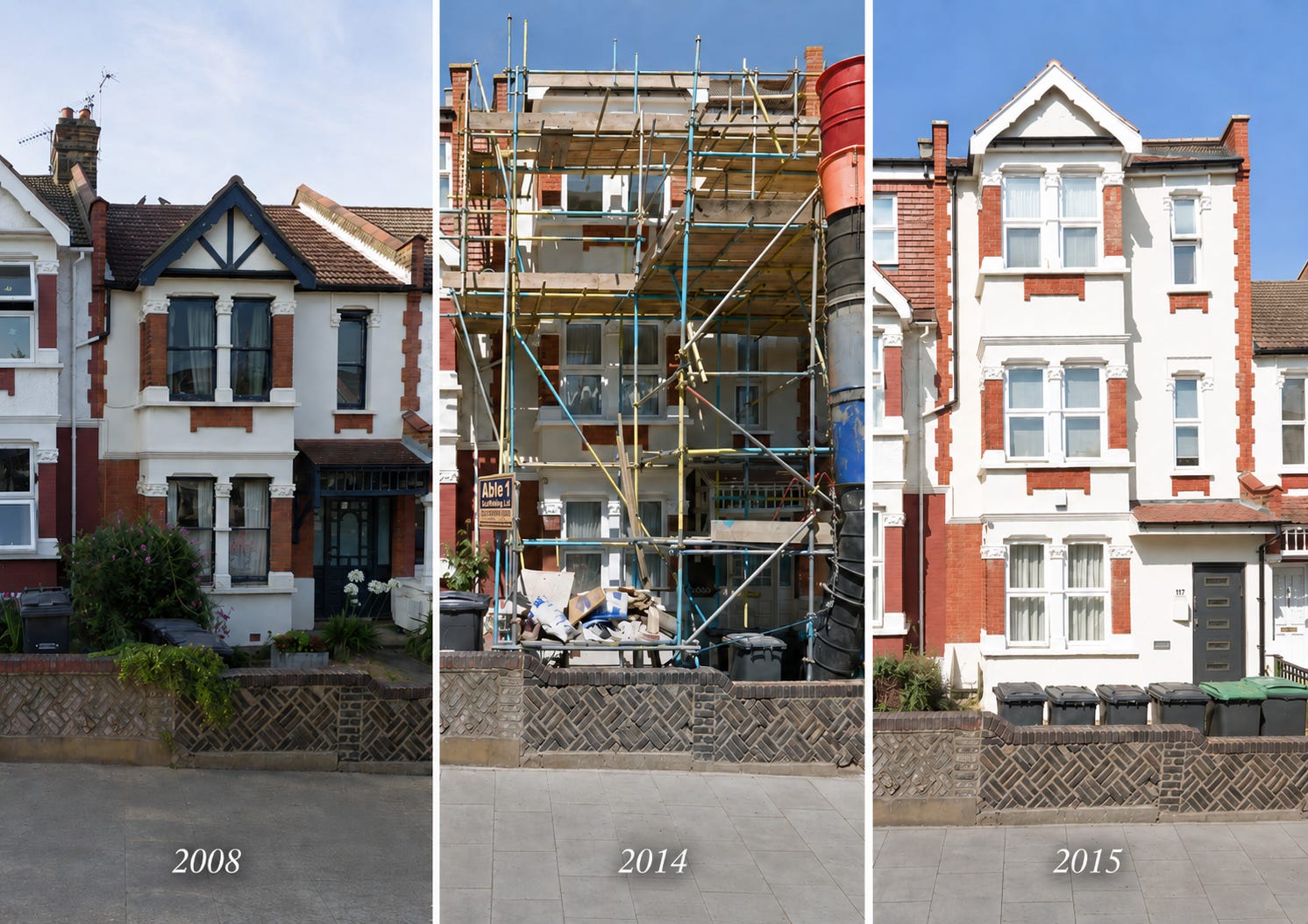
This is a controversial policy. More than any other policy, it is likely to mean building near where people live. When Labour attempted a similar policy under John Prescott’s tenure, it saw massive pushback and was dubbed ‘garden grabbing’. It was swiftly reversed by the Conservative-led Coalition in 2010. However, the benefits are large and the need for housing has never been greater. Policies that in the past have been dropped for being too radical must now be on the table if we’re to improve affordability. That’s why it is extremely welcome that Labour have kept it in the final NPPF published yesterday.
In fact, the new version improves on the draft in three key ways.
First, clumsy wording about development fitting within ‘the overall street scene’ has been relaxed after warnings from Britain Remade among others that it would function as an effective veto on taller buildings.
Second, the Government has also made the rules for garden development more flexible. While the default remains that development should not occupy more than twice the footprint of the existing buildings and should leave at least half of the previously undeveloped part of the plot unbuilt, these are no longer absolute limits: larger developments can be approved where they can be accommodated without harming the character of the area, taking account of infrastructure and whether the location is sustainable.
Third, the final policy has also been broadened to make clear that it supports extensions that create additional floorspace, not just schemes that create additional homes. This could be a lifeline for families that have outgrown their existing home but have space to extend to create new bedrooms.
The Government clearly intended to highlight the ‘Train Belt’ policy. It was the lead item in their press release. In theory, it is the most pro-development change in the planning system in a very long time. Yet, it is likely to disappoint in practice as extreme affordable housing demands threaten viability. By contrast, the less-hyped (in fact, not mentioned at all in the Government PR) policy on extending existing properties could play the biggest role in bringing Labour closer (but unlikely close enough) to their 1.5 million home target.
You're right to highlight mansarding - it's a good policy and yes the increase in bedrooms seen in South Tottenham is a good sign that thinking beyond new homes can improve results.
When I was at the London Assembly, we supported airspace development in our Midrise report ' published back in March. https://www.london.gov.uk/who-we-are/what-london-assembly-does/london-assembly-work/london-assembly-publications/between-skyscrapers-and-semis-londons-missing-mid-rise-housing
Where we disagree are the phrasing "extreme affordable housing demands" - sends us down a potential political rabbit hole of debating what's more extreme, the lack of affordable housing, or requiring some. Though of course there's a balance to be struck.
Allowing mansard bedrooms and more side and rear extensions will turn suburban streets into building sites with skips, tradesmens lorries, parking chaos, etc etc as happened when basement extensions were allowed in places like Clapham in London.
Doesn't affect me personally, but it was hell for neighbours for months or years.