
During the heady days of 2017 when the Absolute Boy Jeremy Corbyn was about to become Prime Minister, the Lancashire city of Preston was often an inspiration for the thinking Corbynite. Preston’s council’s policy of directing public procurement spend to local businesses and co-operatives was seen as a model for how the Left could revitalise the ‘left behind’ areas that voted for Brexit. At the time, there was a fair amount of debate over how effective (or not) this approach was for Preston – and whether it could be spread nationwide.
I find this debate baffling. Preston is doing reasonably well for a northern former industrial town. Productivity is below the UK average but above nearby towns such as Blackburn and Blackpool. Preston’s wider region has higher productivity than anywhere else in Lancashire, Merseyside or Cumbria. However, it is almost certainly not due to the ‘Preston model’ of shopping locally. Preston Council’s entire budget is just under £30 million a year. That is less than half a percent of Preston’s GDP in 2023 of £6.2 billion.
Nevertheless, Preston is a model for the nation, just not for the reasons that got lots of people down south excited or angry. Let me explain.
Preston builds a lot
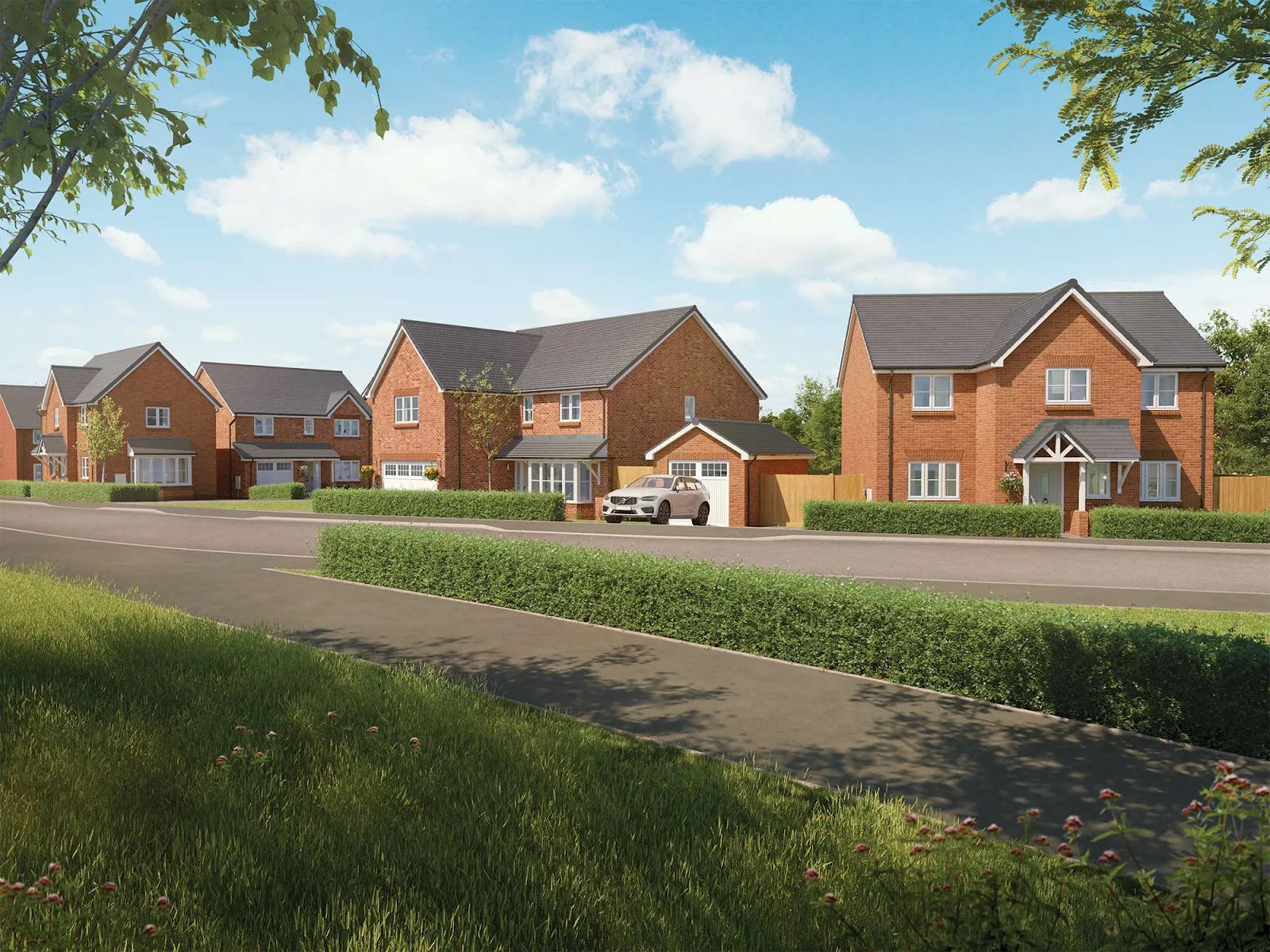
New homes under construction in North West Preston The Paddocks, Higher Bartle | Our Developments | Wain Homes
I spend a lot of time looking at housing stats. Naturally, I look for places I know and Preston, where I lived for many years and still visit regularly, is one of them. Whether it is for raw housing delivery, delivery relative to affordability or delivery relative to population size, Preston always appears near the top. In fact, relative to its central government imposed housing targets Preston built more housing than anywhere else in England from 2021 to 2024. Since local housing targets were introduced in 2018, Preston has exceeded its target by a substantial margin every year.
Compare this to Camden, where I live now, which has one of the worst housing shortages in the country.
Preston’s performance is set to get even better and Camden’s even worse. Camden is projected to build just 60 new dwellings in the next two years, while Preston received the second highest number of planning applications relative to its housing target in England.
This matters because councils need far more planning applications than homes they intend to build. Around 90 percent of applications are approved, and only about 70 percent of approved schemes are actually built. A council that wants to hit its target needs a large pipeline. Preston comfortably clears this hurdle.
Preston Council is also much better than average at converting permissions into completed homes and is likely to remain so.
What makes building so hard?
The median voter is mildly NIMBY.
There are a decent number of hardcore NIMBYs everywhere. They turn up to council meetings and send endless letters and emails. But these people are usually a vocal minority. The median person in most places is neither a committed NIMBY nor a passionate YIMBY. They are slightly sceptical.
Living next to a building site is annoying. More people might mean more traffic. The area will look different to the one they moved to. So the reasonable question is: what is in it for me?
Most of the time the answer of the British planning system is: not much.
Despite thousands of pages of documents for every planning application and tens of thousands of pounds flowing to various public bodies, very little of the uplift from granting planning permission is experienced directly by existing residents. Some of the gain goes to the previous landowner. Some goes to the developer, which provides the incentive to build at all. But a large amount is dissipated through a slow, expensive system that produces paperwork rather than visible improvements.
The result is a system where developers spend huge sums satisfying overlapping and often contradictory requirements, but the average resident sees very little. The process is extractive for developers but gives little to locals.
The Community Infrastructure Levy (CIL), a local tax councils can levy on developers, and the New Homes Bonus, a payment councils receive from central government for building, are meant to change that. These are the mechanisms through which councils directly receive money from development. But how it is used matters enormously.
Take Camden, where I live,CIL revenue is spread very thinly. In 2022–23 over half of Camden’s CIL money was spent on general repairs to roads and street lighting. Another large share was divided into many small ward-level projects such as minor playground upgrades. Most residents likely assume these are funded from council tax. Few will connect them to new housing.
Camden doesn’t even appear to spend a lot of its CIL money and has created a system for reallocating funds from wards with more than half a million pounds saved up to wards with less. Camden uses the New Homes Bonus to fund general council budgets. The effect is to detach development from visible local benefit. Housing arrives. Money disappears into general spending. The median voter remains sceptical.
Preston chose a different path.
Making housing pay for locals
Preston’s CIL payments and New Homes Bonus are almost all paid into the ‘Preston and Lancashire City Deal’. Since 2013, because of Preston’s rapid building, these payments have amounted to £60 million, 2/3rds from developers, 1/3rd from central government.
The City Deal is an agreement between Preston City Council, South Ribble Borough Council, Lancashire County Council and several central government departments and agencies.
Under the deal, £47 million from the sale of Homes England assets in the area was retained locally, with the uplift in land value captured and reinvested. A further £80 million was committed by the Department for Transport. Around 2 percent of Lancashire County Council’s pension fund, worth approximately £100 million, was redirected into investments within the City Deal area. In the context of an annual council budget of around £30 million these are vast sums of money.
The central government and Homes England funding was conditional on Preston and South Ribble delivering at least 17,420 new homes.
Preston agreed to put the vast majority of its New Homes Bonus receipts, most CIL income and additional business rates into a single infrastructure pot, combined with the Homes England and Department for Transport funding. Housing delivery was the price of admission.
This cash was then used to fund very clear, very visible and very concrete improvements for local residents which the council made clear were only happening because of the housing.
The largest of these was the West Preston Distributor, now known as Edith Rigby Way. This created a new junction on the M55, effectively creating a large bypass around the north-west of the city. Road capacity has been increased far beyond the extra demand created by the new housing. It would not have happened without development and has delivered clear benefits across the city.

The West Preston Distributor
Another smaller road across the north of the city, called William Young Way, was funded using additional, CIL-like payments from nearby housing developments. It has played a major role in mitigating congestion from new housing in North Preston.
Other major projects include the South Ribble Western Distributor, the Penwortham Bypass and the Broughton Bypass. Both bypasses removed long-standing congestion bottlenecks from residential areas and had been planned for decades, forty years in the case of Broughton, but remained unfunded until the City Deal.
While a small minority of residents were and remain implacably opposed to development, the clear causal link between allowing housing and receiving new infrastructure significantly reduced wider resistance. Woodplumpton and Catforth Parish Council, where much of the new housing has been built, were initially sceptical and questioned why infrastructure could not be delivered in advance. In practice, promised roads were built, in some cases ahead of schedule, and the parish council received a share of CIL funding. Opposition softened as a result.
Preston is now preparing its local plan for 2026 to 2041. The strategy is to complete the build-out of North West Preston, then expand into West Preston between the new dual carriageway and the suburbs of Cottam and Lea.
Further growth is explicitly linked to delivering a new train station, Cottam Parkway, which received planning permission in 2023. Preston only has one train station and the promise of a second station is tied directly to building homes.

Cottam Parkway station will have regular service to Blackpool, Preston and onwards to Manchester.
This is the crucial difference. In Preston the mildly sceptical resident can see the bargain. More homes mean new roads, bypasses, parks and potentially a train station. The link is repeatedly made explicit.In Camden the link is largely invisible.
Get the incentives right, the housing will follow
Preston’s success is partly a story of good local leadership. But it is mostly a story of incentives. The City Deal meant that Preston councillors and staff knew that building enough housing would lead to real benefits. And they were able to show those benefits to voters and residents.
Preston shows that the mildly NIMBY median voter can be won round. Not everyone becomes a YIMBY. But many can be persuaded to accept development in their backyard if the bargain is obvious and credible.
Housing delivery was turned into the ticket to visible, city-wide improvements. Camden, by contrast, has less development money to spend and what it does have it spreads thinly across general maintenance and small projects that feel unrelated to new housing. The result is weak incentives for councillors, sceptical residents and poor delivery.
The median voter is not a NIMBY zealot. They are asking a simple question. What’s in it for me? Preston has found a convincing answer.

Interesting piece and it seems to have worked out well for Preston and all the new homeowners. But I'm not sure about the original residents. The part of Preston where I live, was a quiet, semi-rural parish until recently. The fringes of the parish have now been urbanised with thousands of new homes, huge new roads, care homes etc. and development is continuing apace. While I don’t consider myself a NIMBY, I don’t see any benefits for the residents that were already here. We still don’t have a shop nearby or any community facilities. We now must join a traffic jam to get to the shops due to the thousands of additional vehicles in the area. Mature trees and ancient hedgerows have gone forever. New planting is no substitute for this loss, and it is substandard often with a more than 50% failure rate. Litter, fly-tipping, speeding drivers and anti-social behaviour have all risen due to the increase in population. And the old country lanes are wrecked due to the HGV’s travelling to the building sites. The area was by no means paradise before, but it is now ugly. It could have been done so much better.
Preston has always befitted from its location. It was the site of the U.K’s first motorway (the Preston by pass opened in 1958) and more recently, in addition to being located in both the M6 and WCML, is on the intersection of the motorways to Blackpool and East Lancashire. It is also the site of one of the biggest universities in the U.K. as well as a key location for the aerospace (BAE systems has two of its biggest sites on either side of the city) and nuclear industries . So it’s relatively good economic performance isn’t all that hard to explain. Nor is its house building record given that the Central Lancashire New Town was one of the last designated and land is relatively simple to acquire (the same is true for Warrington further down the M6 and WCML).