
Hackney’s Shoreditch Works scheme should, on any straightforward reading, be happening. 78% of people prefer it to the existing building. Ninety-five percent of those who wrote in to planning officers supported it. At the planning committee, five out of seven councillors appeared supportive.
And yet there is still no guarantee it will go ahead.
After more than 9,000 pages of documentation and a meeting that ran until almost midnight, the committee’s effective conclusion was simple: more documents are required.
The evening illustrated something deeper than disagreement about one development. For the most part, councillors and officers were trying to make the system work. The problem is that the system itself makes coherent decision-making extraordinarily difficult. Poorly drafted rules and expansive interpretations of vague policies mean that even where there is broad support, schemes can become trapped in procedural quicksand.
How does a development that most people like, and most elected representatives appear to support, end up here? This is an anatomy of a planning committee meeting.
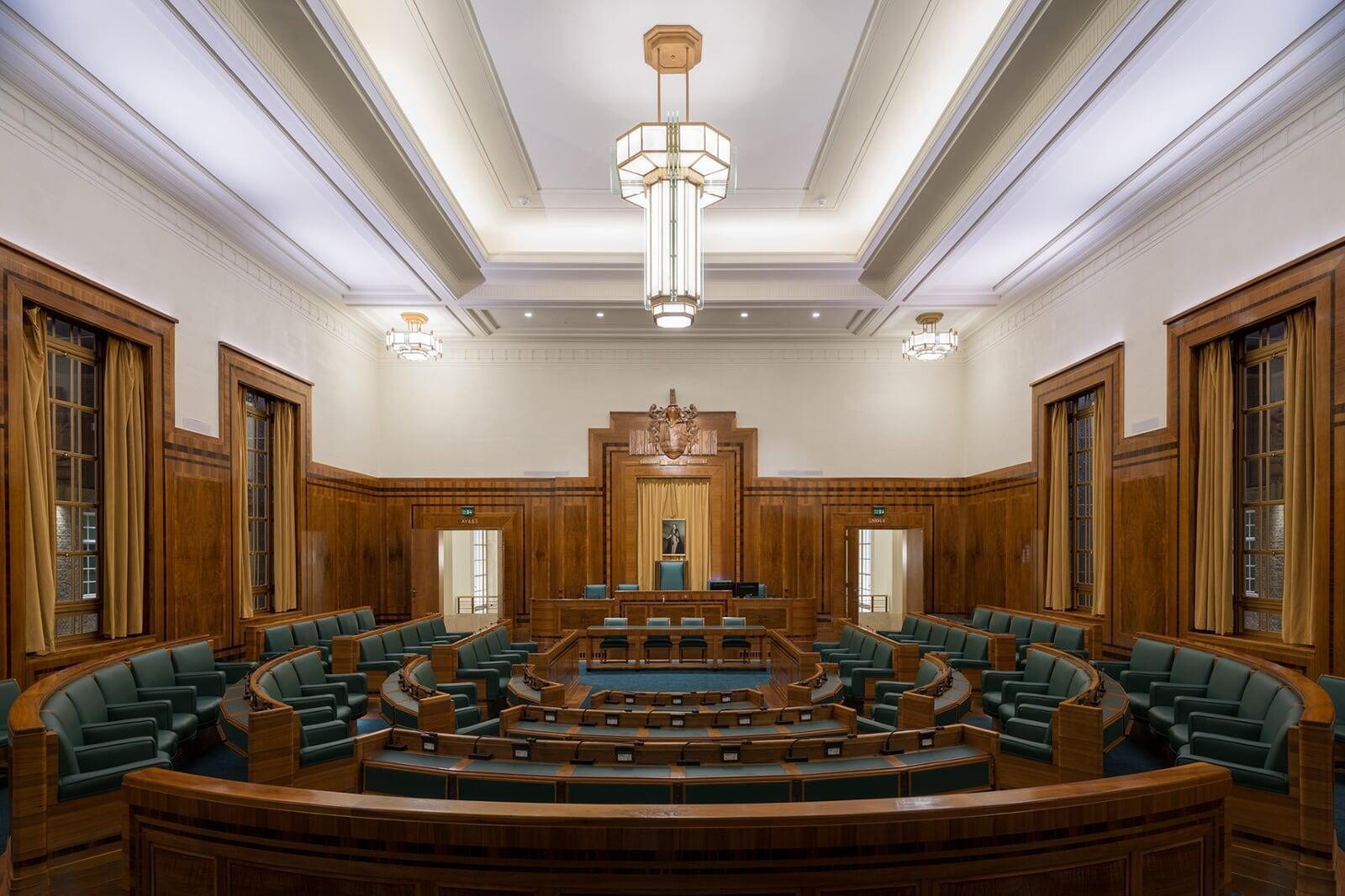
Planners out of step with councillors
One of the main objections from officers was that the building failed to meet heritage and design standards set out in Hackney’s rules, particularly those governing the South Shoreditch Conservation Area.
The officers’ report described the scheme in strongly negative but also subjective terms: “overbearing”, “incongruous”, not “respecting the grain”. The height in particular was treated as a decisive problem. At one point the lead planning official made clear that, given the scale of the building, a recommendation for refusal would have been likely regardless of concessions elsewhere.
Councillors were largely unpersuaded.
Councillor Desmond, Hackney’s longest-serving councillor, dismissed the idea that the building was too tall, noting much larger towers just streets away. Councillor Wrout, who was often sceptical of the developer’s assurances, praised the design and thought the height struck an appropriate balance between nearby skyscrapers and the conservation area. Councillor Narcross, who ultimately voted against the scheme, nonetheless described the buildings as “really nice” and said they would improve the streetscape. Councillor Suso-Runge questioned the premise of treating contemporary development as a threat to heritage at all, observing that today’s buildings become tomorrow’s heritage.
The issue is structural. Design and heritage standards are necessarily vague. Whether something is “overbearing” or “following the grain” is a matter of taste. That vagueness transfers discretion from ordinary people to elected representatives to professional planners and heritage experts. Planning becomes less about clear compliance and more about aesthetic assessment. And we see time and time again that planning officers, architects and heritage officers have aesthetic preferences completely different to the general public who will be subject to their decisions.
In this case, there was a clear gap between officers’ conclusions and the instincts of most councillors. While most of the fault lies with the out of touch planning officials, Councillors bear some responsibility here. If they believe certain policies are either unimportant or so vague that officers can reasonably interpret them in ways councillors themselves reject, why were those policies adopted in that form? And why are they not being clarified?
A policy no one could explain
If heritage exposed a cultural gap, affordable workspace exposed a drafting problem.
Hackney’s Local Plan states that new developments should provide affordable or low-cost workspace equating to a minimum of 10 percent of gross new employment floorspace.
At the meeting, the developer argued that providing 10 percent of the additional workspace on the development as affordable met that requirement. They relied on a KC’s opinion and said the interpretation aligned with the understanding of a former council officer involved in drafting the policy.
Planning officers took a different view. In their interpretation, it was 10% of the sum total of all workspace on the site that had to be affordable, meaning the requirement was effectively higher.
Councillors repeatedly sought clarity. The developers wielded their KC opinion to argue one interpretation. Senior planning officers argued another. It wasn’t really obvious to anyone impartial who was right.
If a senior Assistant Director of Planning at a large London council and a KC disagree on what a policy requires, the policy is not clear enough. And if it is not clear enough, it is not fit for purpose.
The result was confusion at the committee table. Councillors were asked to apply a policy whose meaning was itself contested. That is not a recipe for confident decision-making.
The Chair and the breakdown of process
Councillors, planning officers and the developers conducted themselves professionally and were all clearly trying to do their jobs to the best of their ability in an insane system. The same cannot be said for the chair.
Councillor Webb made no secret of her agreement with the officers’ recommendation. That in itself is legitimate. But a chair’s role is to facilitate scrutiny, ensure members can test evidence properly, and allow the committee to reach a considered decision.
On at least four occasions, councillors attempted to ask direct questions to the developer, particularly on affordable workspace. The chair intervened to prevent the developer from responding. Instead, officers were asked to answer on the developer’s behalf, often speculating about their positions or intentions. This contributed to the meeting running late and left councillors visibly frustrated.
The contrast with earlier items was striking. For other applications that evening, councillors were able to question both officers and applicants freely.
Councillor Samatar’s exchanges were particularly revealing. She repeatedly sought clarity on the affordable workspace issue and, at one point, expressed doubt in her own understanding. Yet the central reason for confusion was that the chair has prevented competing interpretations from being aired fully in real time.
Later, Councillor Samatar explained that although she had historically followed officer recommendations, she felt compelled to support this scheme because it represented the kind of development she entered politics to champion. The chair responded by admonishing her for “grandstanding” and emphasising that the committee’s role was to apply policy. The exchange was sharp, unnecessarily personal and not behaviour that would be tolerated in most workplaces. While the tone from the chair was consistently combative it was noticeably sharper towards Councillor Samatar.
Another instance of bias was that councillors representing the area where the development would take place were also prevented from speaking on Shoreditch Works, though relevant local councillors had been allowed to speak on earlier items. This was despite clear interest from committee members in hearing from them. This is likely because Councillor Walker and Councillor Sizer had both spoken in favour of the development previously.
As the debate progressed, concessions from the developer appeared to be shifting the arithmetic. They offered to alter the sequencing of works to prioritise the protection of Grade II listed buildings and to increase payments to address affordable workspace concerns. Councillor Wrout, a clear swing vote who had pressed the developer throughout the evening, seemed increasingly persuaded.
With four councillors clearly supportive and a fifth likely leaning that way, it appeared possible that a form of conditional approval might be put to a vote.
Instead, the chair advised that councillors would not be voting to approve the application, but only whether to defer it. Councillor Desmond objected, noting he had first attended a pre-meeting on the scheme two years earlier and that progress was overdue.
After a break, further legal advice was presented. Councillors were told they could not vote to approve in light of changes proposed during the meeting and could only defer. The committee voted 5–2 to do so, with a revised recommendation to follow after additional documentation.
The procedural position may have been technically correct, though this isn’t clear. But the way it unfolded left the impression that the outcome was shaped as much by process management as by substantive debate.
The System is changing
As several readers pointed out on my first blog about this project, changes are coming. The National Planning Policy Framework is likely about to be substantially revised this year. If the draft survives consultation, it materially changes the way schemes like Shoreditch Works are assessed.
Under the draft NPPF, proposals within settlements:
“should be approved unless the benefits of doing so would be substantially outweighed by any adverse effects…”
Hackney’s planners’s recommendation of refusal found the heritage impact to be “less than substantial harm”. That matters because developments can only get out of this tilted balance in favour of development if there is substantial harm or total loss to a designated heritage asset.
That means Shoreditch Works would fall squarely within the tilted-balance test. All of the supposed “harm” around the building casting a shadow on itself, damage to heritage that only professional planners can see, and affordable workspace confusion would still be part of the debate. But under the draft framework the question would not be whether harms merely outweigh benefits, but whether they substantially outweigh them.
The threshold for refusal therefore becomes materially harder to meet. This does not guarantee approval. But structurally, the draft framework makes refusal significantly more difficult to defend.
If the draft framework is adopted as written, Shoreditch Works would be much more likely to succeed at appeal than under the current framework. It seems unlikely Hackney planning officers would risk that, particularly given that most councillors on the committee appeared to support the scheme. If the new NPPF rules are adopted as drafted, Shoreditch Works should be happening.
Shoreditch Works shows the dysfunction of the current planning system. Labour’s proposed NPPF reforms are probably the last, best hope for making the current system work. Shoreditch Works will be an early test case of whether the system is reformable, or whether it needs to be rebuilt from scratch.

I still can't get my head around the existence of a subsidised workspace requirement. It's a completely nuts barrier to building that piles on additional costs and distorts economic activity.
My head is hurting. 9000 documents not enough? Sounds like the Chair made the meeting more difficult than necessary but was the Code of Conduct breached?