
Leeds does not have a tram. Or a metro. Or a particularly strong suburban rail network. Like most British towns and cities, Leeds is twinned with other cities in Europe. Most cities opt to be twinned with cities somewhat similar to themselves and Leeds is no exception.
Leeds, its German twin Dortmund, and its French twin Lille are all Cities with around 700,000 people living within 10km of the city centre, with an industrial heritage and below average GDP per capita for their country.
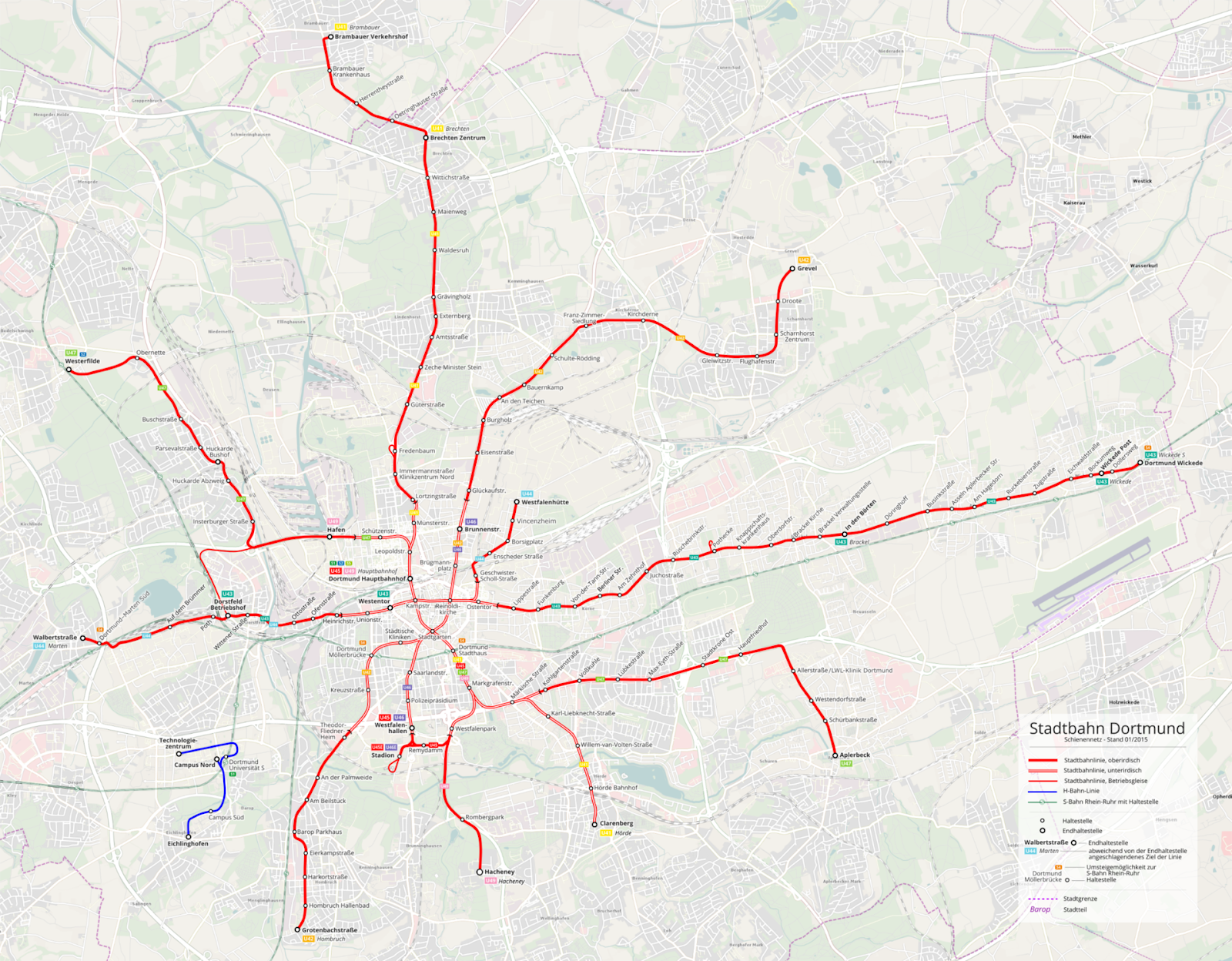
Unlike Leeds, Dortmund has an eight-line, 47-mile Stadtbahn network, essentially an underground tram system, with trains running every ten minutes. The city is also part of the wider Rhine–Ruhr S-Bahn network, a faster commuter rail system with four lines and about 25 miles of track running through the city.
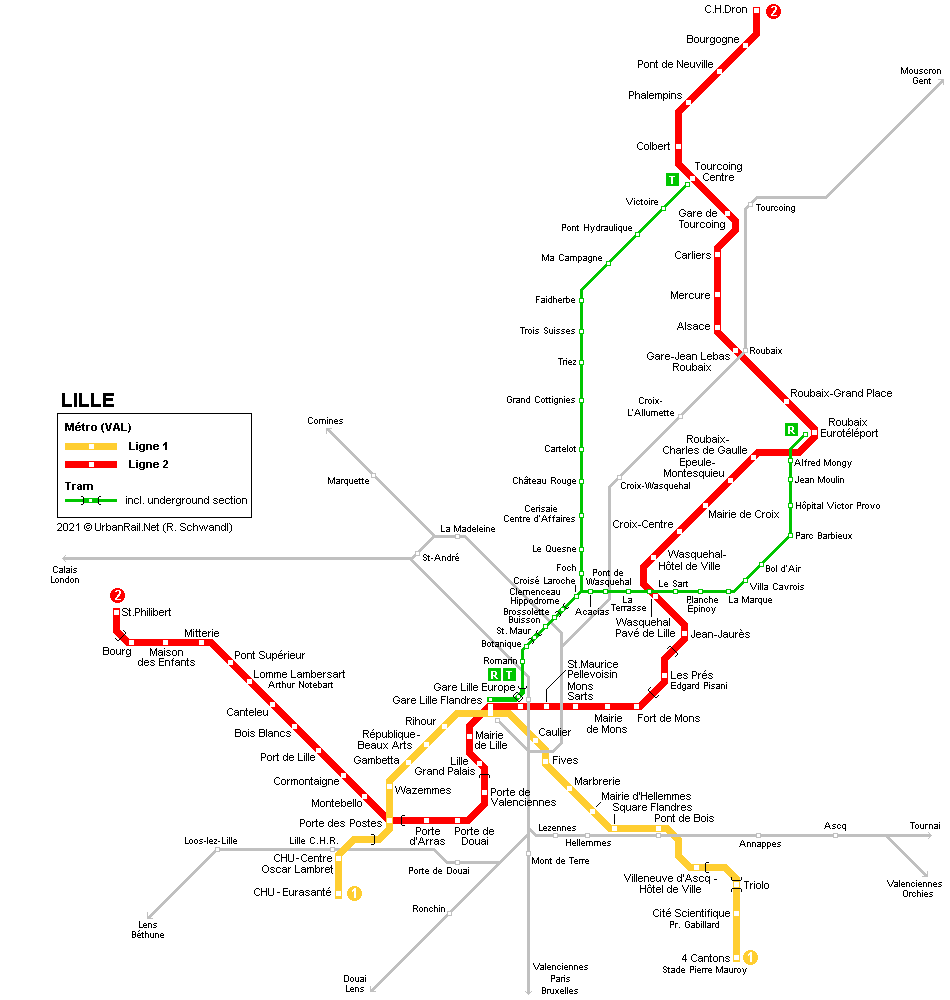
Lille, has a slightly more modest system but still far more extensive than Leeds: two driverless metro lines and two tramlines with a combined network of 38.9 miles. The metro can run extremely frequently, with trains every 66 seconds on one line at peak times.
Why the difference?
Part of the explanation is cost. Infrastructure projects in Britain are unusually expensive. Our analysis suggests that tram projects in the UK cost about 85 percent more than in France and more than three times as much as in Germany.
But governance also plays a major role. The decisions, and the funding, for what happens in Leeds do not primarily come from Leeds or even the wider West Yorkshire region. Two years after the local Mayor was elected on a promise of building a tram the government is still ‘assessing the business case’ while writing reports about how maybe it should be a bus instead.
This is because every stage relies on permission and funding from the Department for Transport and other central government bodies in London. Tram projects are typically funded largely by central government, and even funding that is notionally local mostly comes from redistributed national taxation.
In France and Germany it is very different. More decisions are made locally, and far more funding is raised locally.
Getting permission: how rail projects are approved

A Leeds Tram in a Museum. I know that was then, but it could be again.
In Lille and Dortmund, the political decision to build a new rail line is made locally. In Leeds, the key decision is national.
In Lille, the metropolitan authority decides whether to pursue a new metro line. The metropolitan council votes on whether to begin the project and fund the initial studies. The French state becomes involved later through regulatory procedures such as environmental assessments, public inquiries and a Declaration of Public Utility if compulsory purchase is required. But the core political decision to build is taken locally. The city-region identifies the route, commissions studies, decides whether the project should proceed and assembles the funding package. National procedures mainly function as legal checks on projects that have already been decided locally.
In Dortmund the process also begins locally. The city council decides whether the city will pursue a new Stadtbahn line or extension. Council committees examine options and recommend whether to proceed, and the council votes to begin planning and later to approve construction. The project then passes through a formal plan approval process under German transport law. This process is overseen by the state authority in North Rhine–Westphalia rather than the federal government. The state’s role is regulatory: reviewing plans, environmental impacts and technical compliance before construction can begin. The political initiative, project design and delivery remain local.
Leeds operates very differently. In England, a new tramway normally requires a Transport and Works Act Order (TWAO). This order is granted by the Secretary of State for Transport after a statutory process that may include consultation, objections and a public inquiry run through the Planning Inspectorate. The order provides the legal powers needed to build and operate the line and to acquire land compulsorily.
This means Leeds cannot simply decide to build a tram and move forward. The city and the West Yorkshire Combined Authority can develop plans and business cases, but the project only becomes legally buildable once central government approves it.
Central involvement does not end there. Large transport schemes in England typically have to return repeatedly to Whitehall as they progress. West Yorkshire will need approval for the statutory order authorising the line, the business case securing government funding, the outline business case confirming the funding package and the final business case before construction contracts can be signed. They will also need permissions related to the environmental assessment. If and when objections are raised, the scheme will also go through a public inquiry run on behalf of the Secretary of State for Transport.
The result is a very different dynamic. Lille and Dortmund make decisions locally and drive projects locally, even while complying with national standards. In England, cities develop proposals but progress depends on repeated central approvals.
This also affects capacity. Dortmund’s civil engineering department alone employs almost as many people as the entire Highways and Transportation team in Leeds. British cities face a circular problem: because they have not been given the powers to deliver major infrastructure, they have had fewer opportunities to develop the expertise needed to do so. The resulting lack of capacity is then used as a justification for keeping those powers centralised.
Over time the UK should move toward a system closer to those in France and Germany, where cities make the core political decisions about local transport infrastructure. In the meantime, the current process could at least be simplified. Instead of repeated approval gates, major transport schemes should require no more than two approvals through the Treasury Approvals Process: one from the Department for Transport and one from the Treasury and Cabinet Office.
Paying the bills
The biggest difference between Lille, Dortmund and Leeds is not only how much they spend on transport, but how much revenue they can raise and control locally.
Lille benefits from a dedicated local transport tax. The Versement Mobilité (or Mobility Payment in English) is a levy paid by employers to fund transport. Local areas can set their own rate, some choose lower taxes, some pick more transport. In Lille this raises more than €300 million per year, forming the backbone of the metropolitan transport budget alongside fares and borrowing. Because the tax is locally controlled and predictable, it provides a stable revenue stream that can be used to finance major projects such as metro upgrades, new rolling stock and network expansion.
Dortmund does not have a dedicated transport tax like Lille. Instead it has significant control over its own tax base. German cities can set the rates for major local taxes, including the trade tax on businesses and property tax, through locally determined multipliers. Most of the revenue stays with the municipality and can be spent through the city’s own budget. This gives cities like Dortmund the ability to generate substantial local funding and allocate it to infrastructure priorities alongside federal and state grants.
Leeds has far less fiscal autonomy. Its main local taxes are tightly controlled by the national government. Business rates are largely set nationally and councils face strict limits on council tax increases. They also have limited discretion about what they spend their money on with most council budgets spent on statutory requirements councils have to prove. Therefore, major transport projects typically depend on funding packages negotiated with central government. Local contributions do exist through mechanisms such as developer contributions or borrowing, but there is no equivalent to Lille’s dedicated transport tax and far less ability to increase tax revenues locally.
The result is a very different starting point for infrastructure investment. Lille can rely on a large dedicated transport tax. Dortmund can raise substantial revenues through locally controlled taxes. Leeds must depend far more heavily on funding decisions made in Whitehall.
In very prosperous places with strong opportunities for land value capture, such as London, cities should be able to finance all their own infrastructure with minimal central involvement and no central money. Other cities may still require some support from national government, but probably far less than today if they were given the right fiscal powers.
Lille offers a useful example. It is the largest city in mainland France’s poorest region, yet it still covers most of its transport costs locally. Lille has a GDP per capita very similar to that of Leeds. British cities poorer than Leeds may struggle to pay all of their own bills, but if given enough freedom they could likely fund the majority of their own transport investment.
What can be done now
In the long term the UK should move toward a system more like France’s, with transport-specific local taxation, or Germany’s, with much greater freedom for councils to raise and spend their own revenue. Central government using the fact local politicians have a mandate to deliver something as a reason to block it has to end.

In the meantime, several existing UK mechanisms could be expanded or simplified.
Cities should be allowed to introduce a tourism levy on overnight stays in hotels and short-term lets, creating a small but reliable revenue stream linked to visitor demand.
Land value capture should also be strengthened. Mayors should be able to levy business rate supplements without requiring a local poll, learning from London’s Crossrail experience where a similar levy helped fund a transformational transport project. A council tax precept on properties near new stations could also be considered, expiring once construction debt is repaid.
Finally, Workplace Parking Levies should no longer require approval from the Secretary of State. At present new schemes can take up to three years to secure sign-off from the Transport Secretary. Decisions on whether to introduce such levies should be fully devolved to local authorities and metro mayors, as they are fundamentally regional transport policies.
Giving cities more power over both transport decisions and transport funding would speed up projects and over time build up the expertise needed to reduce costs. We need to Let Mayors Build.

Great blog!
London is like another country compared to the rest of Britain. To the rest of us outside London, it seems government only cares about the south east of the country.