
Unless something extraordinary happens, Andy Burnham will be PM in under a week. Inevitably, there is a lot of talk about what he plans to do (and what he has done). Whenever Britain changes PM, the space for what’s politically possible opens up. It should be an exciting time for wonks, particularly for those of us interested in public transport, devolution, and property tax reform, but I’m worried.
My fear isn’t so much about what the next PM might do, but what he might not. Under Starmer’s leadership, Labour have pursued an agenda of planning and regulatory reform. It has been too slow, too timid, and occasionally, tactically unwise, yet there has been hard-won progress.
In two years, Labour have lifted the ban on onshore-wind, eliminated the need for extensive pre-application consultation for infrastructure projects, reinstated housing targets and raised them too, made it much harder to delay infrastructure projects with no-hoper legal challenges, legislated for a dramatically simpler system of environmental protection, got rid of the solar cliff edge, and made it easier to build on the grey bits of the green belt.
Some of these reforms are already bearing fruit, but on their own they’re insufficient. Labour are set to fall 700,000 homes short of their 1.5 million homes target. British infrastructure projects are not just slower, but also cost, on average, 65% more than their international equivalents. Hinkley Point C, a new nuclear power station in the South-West, is not only the world’s most expensive, it is also at serious risk of delay. There is clearly much more to do.
Under Starmer and Reeves, Labour got that. You can certainly criticise them for not recognising the chasm between rhetoric and action sooner (and I have), but they have put forward a second wave of planning reform, which is in some areas genuinely radical. It would be a grave mistake if Burnham were to let it fall by the wayside.
Here’s what Burnham should keep.
The new National Planning Policy Framework
Let’s start with housing. The most important document in planning policy in England is the National Planning Policy Framework. It sets out, in broad terms, what can and can’t be built in England. When councils draw up their local plans, they do so following the policies of the NPPF. When planning committees decide on an individual planning application, their job is to work out whether the project is complying with the NPPF’s policies. This is the second time Labour have attempted to change the National Planning Policy Framework. When they got into office, they made sweeping changes, including reinstating housing targets, scrapping the de facto onshore wind ban and opening up large chunks of the Green Belt for development. Their second attempt to reform the NPPF is much more radical in three key ways.
First, it is a complete rewrite. In the past, the NPPF has typically evolved like a track changes document. A paragraph here is removed, a paragraph there is added, the word “substantial” is crossed out and replaced with “significant” and so on.
This is completely different. It dramatically simplifies the policies within the NPPF and creates new national decision-making policies. These are designed to trump local development management policies. This dramatically simplifies things. Instead of having hundreds of local authority-specific policies, developers can instead follow clear national guidance on what can and can’t be built.
Local policies often are more stringent than national rules. For example, in London, many boroughs have extremely strict policies around embedded carbon, the emissions that come from building. The problem is, from an environmental perspective, this is self-defeating. Londoners emit less per capita than residents in many other cities for the simple reason that in London there are excellent public transport options. If you make it harder to build in London by insisting on greener building standards, you end up with the paradoxical result of a less green outcome because fewer people live in the capital and use public transport, and instead more people live in the car-dependent suburbs.
There is an added emphasis too on proportionality. At the moment, councils can insist on massive amounts of paperwork even before they review a planning application. For example, in Walthamstow, developers trying to build a small block of flats were required to submit 73 different documents. The planning application stretched to 1,250 pages – 25 pages longer than War and Peace.
Second, there is a new, beefed-up presumption in favour of suitably located developments. This makes it very hard to refuse developments provided they meet certain conditions. Previously, this only applied to developments in council areas, in local authorities where they were failing to meet their housing targets or their local plans were out of date or invalid. Now, it applies anywhere provided they meet the policies in the national decision-making policies that I mentioned.
This will mean a ‘default yes’ in favour of new homes within walking distance of train, tube, and tram stations. It will apply both to homes near stations in cities and towns, but also to well-connected stations outside cities and towns, including on greenbelt land. This could be huge. Some estimates suggest that the government could easily exceed its 1.5 million home target for the parliament merely by building near stations in London and the South East. If you factor in higher densities in urban areas, you could see even more homes coming forward. This, put simply, is the biggest pro-supply move since World War 2.
Third, the new NPPF contains a strong policy in favour of the densification of existing developed plots. Under this policy, homeowners will have the freedom to add additional floors to their property (e.g. via a mansard roof) and build residential annexes, also known as granny flats, in their back garden.
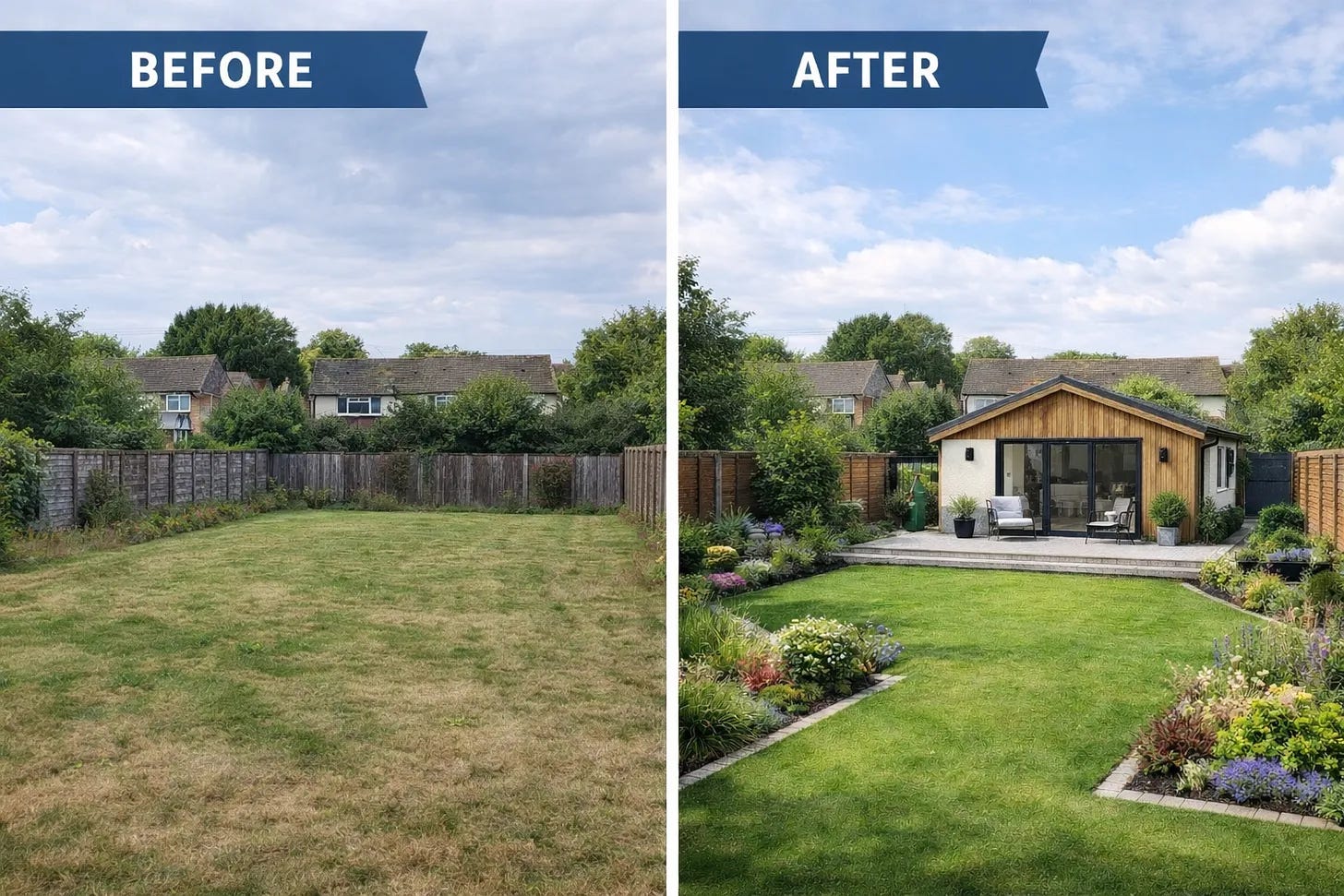
This could be transformative. In one Tower Hamlets neighbourhood, planning policy was changed to automatically allow mansard roofs, the think tank Create Streets estimates that this reform alone created 300 additional bedrooms in the borough. While in California, a similar law encouraging the building of granny flats led to the construction of 100,000 additional homes. In LA, one third of all new homes built are granny flats.
In theory, all of these measures were meant to be in place by now. The new NPPF was put out for consultation last December. The consultation closed in March, but the Government is still yet to publish its response. Some reports suggest that a response is unlikely to be published until after the Summer Recess due to the change of PM. If that’s the case, then it will be one of the most consequential decisions in Burnham’s first 100 days.
Implement the Fingleton Review
Britain is the most expensive country in the world to build a new nuclear power station. As PM, Sir Keir Starmer challenged former competition regulator John Fingleton to figure out why and identify regulatory reforms to cut the cost of building. His review was widely praised, and its recommendations were accepted in full by Sir Keir.
Progress has already been made, but many of the changes called for by John Fingleton require legislation. For example, Fingleton called for the elimination of the recently-created ‘National Landscapes duty’. This would reverse a change from the Levelling Up and Regeneration Act 2023 that has imposed unexpectedly large costs and delays on development. The King’s Speech set aside legislative time for a new Nuclear Bill, but a change of PM and potentially a new King’s Speech is cause for concern.
There’s an opportunity for Burnham here. The Fingleton Review was widely backed by industry and could potentially unlock thousands of jobs in areas where Labour MPs are under threat from Reform. However, despite Sir Keir’s full-throated support for the Review, many of Fingleton’s recommendations have been watered down.
For example, the Review proposed major reforms to the Habitats Regulations designed to avoid repeating the absurdity of EDF being forced to spend £700m on fish protection. Fingleton wanted legislation, but the Government opted for guidance. It is unlikely that guidance alone will be sufficient to change Natural England’s behaviour. Likewise, the most radical measure within the Fingleton Review, which would have created an alternative means of complying with the Habitats Regulations by allowing developers to make large contributions to a nature fund (based on the nuclear site’s acreage), was dropped altogether. That’s a shame because it would, more than anything else, dramatically cut the time it takes to start construction on a nuclear project.
If he were to re-commit the government to implementing the Fingleton Review in full (including the changes dropped by Starmer), then Burnham would send a powerful signal to the bond markets that good growth isn’t just a slogan.
Judicial Review
It is far too easy to delay or block infrastructure projects by bringing lawsuits. This problem is made worse by the fact that when people challenge planning applications on environmental grounds, they benefit from special cost caps, which means that if the case were to go against them, they’re not liable for the legal costs they have incurred on the other side.
The Planning and Infrastructure Act cut the amount of time it takes to deal with legal challenges that have little-to-no chance of success. In the past, litigants would have three opportunities to challenge planning decisions via the courts, now they have just two (and in some cases, just one).
There are however two problems with JR.
First, there’s the ability to delay infrastructure projects on grounds that are unlikely to succeed. This is a serious problem – it is estimated that unsuccessful legal challenges add between £60m-£120m to the cost of major road projects. It is a problem mostly (not entirely) solved by the Planning and Infrastructure Act’s reforms.
Second, there’s the impact of operating in an environment where every single document, survey, and study will be scrutinised in-depth and could be challenged in the courts. The French statesman Cardinal Richelieu once said: “If you give me six lines written by the hand of the most honest of men, I will find something in them which will hang him.” Of course, planning applications for major infrastructure projects aren’t six-lines long. One recently approved solar farm had a million word planning application. The massive growth in planning application length is itself a direct consequence of the risk of judicial review. Developers attempt to avoid legitimate challenges (e.g. the Secretary of State failed to consider all environmental impacts) by providing extreme amounts of information. Even when the risk that a project might impact a projected species is, at best, remote, developers will still carry out extensive surveys to pre-empt legal challenges.
Unlike the first, this latter problem is, as yet, unsolved. The risk remains that vital infrastructure projects can be blocked (or at least heavily delayed) on a technicality, even when elected decisionmakers are persuaded that a project is necessary and should go ahead. To her credit, Rachel Reeves put forward two strong measures that would tackle this latter problem (and in turn, reduce the need for ‘defensive medicine’.)
Under her plan, the existing window to lodge legal challenges after the Secretary of State grants the Development Consent Order (DCO) would remain with one twist. At the end of the window, the Secretary of State would have the opportunity to revise the DCO to address any issues that came up in the judicial review window. Opponents of the project would still be able to bring a legal case, but the chances of success for any litigant will be low. This will, in turn, either deter legal challenges or if they continue, make it much more likely that judges will dismiss them at the earliest possible stage.
For certain projects, such as those critical to the nation’s energy security, the Secretary of State for Energy Security and Net Zero would be able to designate them as being of ‘Critical National Importance’. Parliament would then vote twice (once when the project’s application is accepted and once when the project is approved) to confirm their status. This would, in effect, give individual planning applications the same status as an Act of Parliament. This would close off essentially all routes (except human rights) to legally challenge such projects. As I’ve mentioned before, this might seem like a radical approach, but it actually is the restoration of an approach that until recently most of our nation’s critical infrastructure was built on. The M25, Thames Barrier, and Manchester’s Metrolink were all built via Private Acts of Parliament.
Transport and Works Act Orders
If Andy Burnham stands for anything, it is the idea that too much power is concentrated in Westminster and that devolving it to the nation’s cities and regions would boost growth. One area where Burnham is almost certainly right is in approving new local transport infrastructure. Unlike in most European regions, Mayors lack the power to fund and grant planning approval to new tram or metro systems. This is one reason why 28 French cities have trams, while only 7 British cities do.
Though more could be done, Mayors now benefit from new local tax raising powers in the form of a tourist tax. However, Mayors will still have to ask permission from the Department for Transport to obtain planning permission if they want to build a new tram or metro system. Applying for a Transport and Works Act Order can take over four years. Applications can stretch to thousands of pages too. For example, the TWAO for the West Midlands Metro was 5,718 pages long.
This process is one reason why French tram projects are delivered substantially faster than British tram projects. For instance, the West Midlands Metro - a mile tram extension – took over a decade to build from start to finish. Just over three years was spent on the TWAO process (ignoring the time it took to prepare the application). By contrast, Dijon’s two tram lines were built in just five years total.
This is why Britain Remade (and a host of other groups including Create Streets and ThinkLabour) have called on the Government to devolve the TWAO process to metro mayors. To their credit, the Government has listened and is currently consulting on devolving the process. All signs suggest Starmer and co. planned to follow through and devolve it.
***
Andy Burnham will want to do things differently to his predecessor. The polls suggest the public wants the same. But, it shouldn’t be change for change’s sake. If Burnham is to succeed in his mission of delivering good growth in every postcode, then he should follow through on his predecessor’s agenda of planning reform.
First, because planning reform remains one of the most powerful levers to boost economic growth (and in turn, generate revenue to pay for better public services). And second, because if Burnham wants more council homes and wants better infrastructure for places like Manchester and Leeds, then he needs to reform the planning system that constrains both.
Its an area where there really should be cross-party support.
Having personally investigated a project for a major wind-farm on Lewis some years ago, which at the time had been 9 years in the planning. With Greenpeace being behind part of the campaign against. You could not make it up...
And the Lewis nimbies are at it again, this time about a wind farm 8 miles off shore.
I wish I could share your optimism about householders having freedom to add mansards to their houses. It’s SUCH a good solution to some of the issues of the housing crisis – and it radicalised me about planning policy after a family we know were prevented from building one in Tower Hamlets and so gave up and left taking their kids from an already undersubscribed school.
Unfortunately the draft NPPF only supports mansards for “creating additional homes within settlements”. Adding “substantial weight” to that policy is good, but the stipulation on additional homes is not new and the current formulation of “new homes” has been used to discount support from the NPPF for applications to extend existing homes. Likewise I fear the requirement for a proposal to “be consistent with the overall street scene” will also be used to discount the “substantial weight” where planning officers can say there are only one or two mansards already in a terrace so a further one would be incongruous.